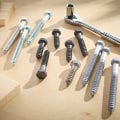
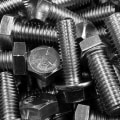
This includes bolts, screws, nails, and more from a Fastener Supplier near Midland TX. Knowing the right types of bras will make your. Usually, fasteners form a non-permanent joint. In other words, when you use a fastener from a Fastener Supplier near Midland TX to connect two components, you can remove it and the separate pieces should come apart without being damaged. The same would not be the case with a welded joint, for example. This includes bolts, screws, nails, and more from a Fastener Supplier near Midland TX. Knowing the right types of bras will make your. Usually, fasteners form a non-permanent joint. In other words, when you use a fastener from a Fastener Supplier near Midland TX to connect two components, you can remove it and the separate pieces should come apart without being damaged. The same would not be the case with a welded joint, for example.
The only exception to this rule are rivets, which fall into the category of fasteners, but create permanent joints. Mechanical fasteners come in many forms, including screws, nails, nuts, bolts, washers, anchors, and rivets. Each of these different types of fasteners is a category in its own right, with many types to choose from. If you've ever been in a closing aisle at a hardware store, you know how many different types of fasteners there are.
Let's look at each of these common examples of fasteners and break them down a bit more. Nails have been used since ancient times and are still a household item for everyday use. You can easily tell the difference between a screw and a nail because a nail has no thread. While a nail doesn't provide the same holding power as a screw, it has greater cut resistance, making it the best choice for some applications.
Many types of nails take their names from their applications, which can make it very easy to find the right nail variety for a job. They usually have specific features designed to work with the materials or application in question. A threaded fastener has internal or external screw threads. The most common types are the screw, nut and bolt, possibly including washers.
Other more specialized types of threaded fasteners are captive threaded fasteners, bolts, threaded inserts, and threaded rods. The different types of fasteners can be grouped into three broad categories: temporary, permanent and semi-permanent. Technically, no type of bra is truly “permanent”, since all of them can be removed if is required. Types of fasteners include the bolt and nut, which is the most common connection in manufacturing, screws, nails, rivets, bolts, etc.
If you have ever browsed our online store, or even the shelves of your local hardware store, you may have noticed the wide variety of types of fasteners available. Do you know what all of them are and which are the most suitable for specific projects? To help you identify the different types of stainless steel fasteners, we've prepared this handy guide. From screws to nails and rivets to U-bolts, this list will help you make sure you always know precisely which fastener to choose, whatever project you're on working. Bolts are probably the most common type of fastener.
They are used to hold unthreaded components together and work in conjunction with nuts. They have external male threads on one end and a hexagonal head and are tightened with a wrench. Since nuts are used with non-threaded components and, unlike screws, they do not provide holding power through their thread, it is necessary to install them with the help of a nut. Nuts are ring-shaped fasteners that are attached to the ends of the bolts.
The different types of bolts include hexagon head bolts, lugs, carriage bolts, and U-bolts. They also have a male thread that starts right at the tip and usually covers the entire length of the screw. Screw heads can come in many shapes and sizes, and there's an amazing variety of screws for all types of projects and materials. Unlike bolts, screws rely on their threads to maintain their grip. Most screws are self-tapping, meaning they cut a thread in the material as they are screwed in.
Among the different types of stainless steel screws available are wood screws, roofing screws, hexagonal screws, self-drilling screws and machine screws. Rivets are permanent fasteners that can be used to hold all types of materials. They are incredibly light and have a low profile against the surface of the material being held. There is no need to thread the holes when using rivets, but for their application it is necessary to use a special gun, a pop type riveter.
Once the rivet is placed, a permanent bond forms and cannot be removed. Rivets are the preferred fasteners for the aerospace industry. Washers are rings that are used together with nuts and bolts and are placed under nut heads, gaskets, or shaft bearings. They are used for different purposes, such as reducing friction, allowing a more uniform distribution of nut pressure over the fixed component, eliminating leaks, isolating components or preventing them from loosening due to vibrations.
Anchors are primarily used to fix steel to concrete or to materials such as epoxy or polyester resin. They work by transferring tensile force to the substrate (i.e., e.g.They come in several different shapes, such as wedge shaped acoustic anchors, attached anchors, double expansion shield anchors, recessed anchors, nail anchors, and bolted anchors. The inserts are primarily used as reinforcement. They are often dropped into holes where the thread has eroded, giving way to the insertion of a smaller bolt or bolt to restore joint strength.
They are also used as wrenches in rotating machines or to fix anchor bolts to hanging pipes. The different types of inserts include pins, threaded and non-threaded rods, wrenches and helical threaded inserts. Some types of joints for carpentry use separate internal reinforcements, such as dowels or crackers, which, in a certain sense, can be considered fixing elements within the scope of the joining system, although by themselves they are not fixing elements of general use.